How Purple Line and Corridor Projects May Influence Montgomery County Housing Over the Next Decade
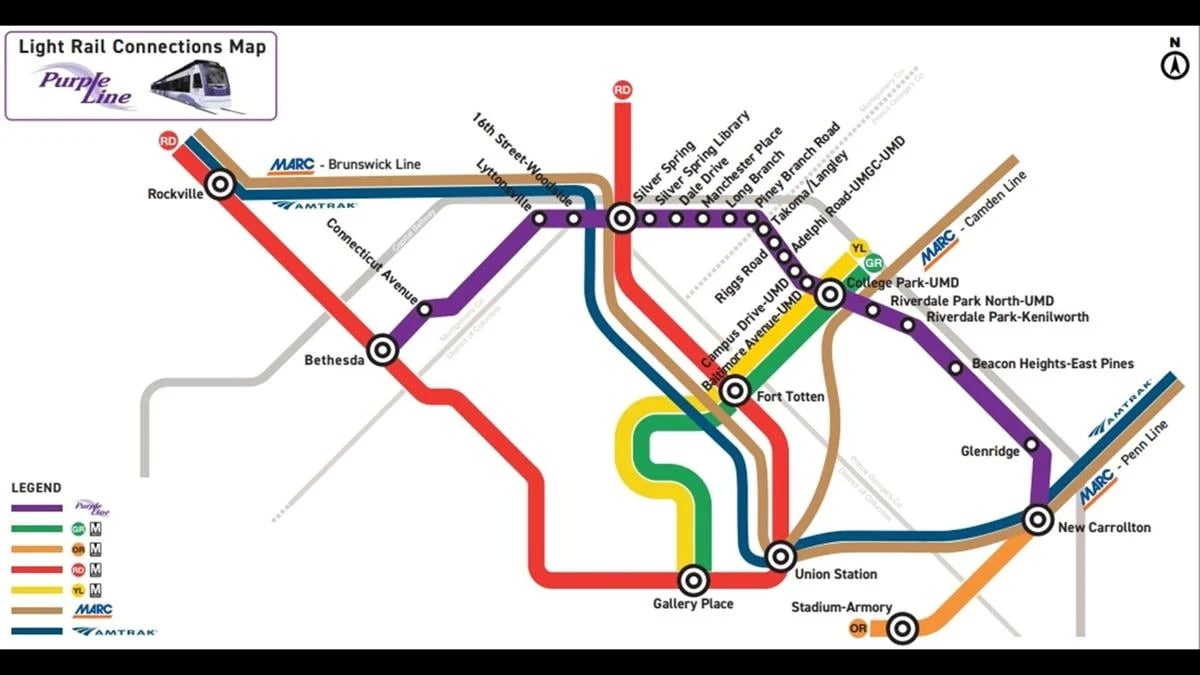
If you own a home in Montgomery County, you have likely heard about the Purple Line and other major corridor improvements. What is less clear is how these projects actually affect your property value, your timeline for selling, and the type of buyer demand you can expect in the years ahead.
This guide breaks it down in practical terms so you can make informed decisions, whether you are planning to sell soon or simply thinking ahead.
The Purple Line is a light rail system that will connect key parts of Montgomery and Prince George’s Counties, linking major activity centers and existing transit lines. Alongside it, Montgomery County continues to invest in corridor improvements such as road redesigns, pedestrian infrastructure, and mixed-use development planning.
Together, these projects aim to improve how people move through the region, reduce travel friction, and support long-term growth in housing and commercial areas.
For homeowners, the important takeaway is simple: improved access tends to change how buyers evaluate location.
Over the past several years, buyer behavior in Montgomery County has become more practical and time-focused. Many buyers are evaluating homes not just by size or finishes, but by how easily they can get to work, services, and everyday destinations.
Transit access and corridor improvements can influence:
Commute flexibility across multiple parts of the region
Ease of reaching retail, parks, and daily services
Long-term convenience as infrastructure continues to evolve
Meredith Fogle of The List Realty explains it this way:
“Buyers are increasingly looking at how a home fits into their daily routine. When access improves, it changes how that location performs over time. Sellers who understand that shift can position their home much more effectively.”
One of the biggest misconceptions is that property values immediately jump when a project is announced. In reality, the impact tends to unfold in phases.
Short-term (during construction):
Temporary disruptions such as traffic changes or construction activity
Buyer hesitation in some cases due to uncertainty
Pricing may remain steady rather than spike
Mid-term (project nearing completion):
Increased buyer interest as timelines become more certain
Renewed attention to nearby properties
Early signs of pricing differentiation based on access
Long-term (after completion):
More consistent demand from buyers prioritizing accessibility
Greater visibility for areas along improved corridors
Stronger resale positioning for homes that align with buyer needs
The key is that value growth is often tied to usability, not just proximity. A home that offers easy, practical access tends to benefit more than one that is simply nearby.
Not every property is affected in the same way. In Montgomery County, the homes that tend to see the most impact share a few characteristics:
Located within a reasonable distance to transit access points
Positioned near improved roadways or pedestrian corridors
Aligned with areas where mixed-use development is planned or underway
That does not mean other homes are left behind. It simply means that some properties may see stronger demand from buyers who prioritize convenience and access.
If you are a homeowner in Montgomery County, you do not need to wait for a project to finish to take advantage of these trends. Positioning starts well before completion.
Here are a few smart moves:
1. Understand your specific location context
Not all neighborhoods are affected equally. A hyper-local analysis will tell you how your home fits into current and future demand.
2. Time your sale strategically
Depending on your goals, it may make sense to sell before completion, during the ramp-up phase, or after the project is fully operational.
3. Market the lifestyle, not just the property
Buyers respond to how a home supports their daily life. Clear messaging around access and convenience can make a meaningful difference.
4. Prepare for evolving buyer expectations
As infrastructure improves, buyers may compare homes differently than they did even a few years ago. Pricing and presentation should reflect that shift.
Infrastructure projects like the Purple Line are not short-term events. They shape how an area functions for years to come.
Over the next decade, Montgomery County is likely to see:
Continued alignment between housing demand and access to key corridors
More interest in areas with strong connectivity to multiple destinations
Greater emphasis on convenience as a core factor in home selection
For sellers, this creates both opportunity and complexity. The homeowners who benefit most are typically the ones who understand where their property sits within these broader changes.
The Purple Line and related corridor projects are not just transportation upgrades. They are long-term shifts in how Montgomery County operates and how buyers make decisions.
If you are thinking about selling, the most important step is understanding how these changes apply to your specific home. That insight can help you price correctly, market effectively, and choose the right timing.
As Meredith Fogle puts it:
“The sellers who get the best results are the ones who understand not just today’s market, but where it’s heading. Infrastructure is a big part of that story.”
Stay up to date on the latest real estate trends.

By Meredith
By Meredith Fogle

By Meredith Fogle

By Meredith Fogle

By Meredith Fogle

By Meredith Fogle

By Meredith Fogle

By Meredith Fogle

By Meredith Fogle
You’ve got questions and we can’t wait to answer them.