Living Car-Light in Montgomery County: Neighborhoods and Housing Types That Work with Fewer Vehicles
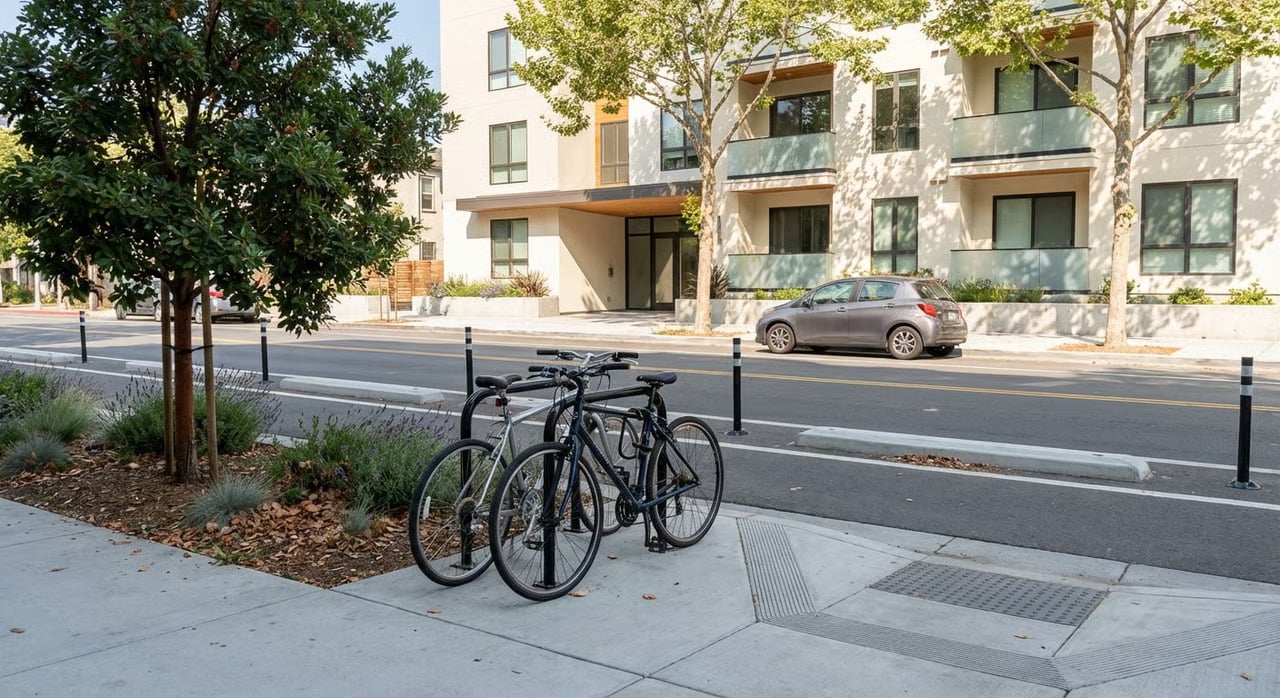
For many homeowners in Montgomery County, daily life has traditionally revolved around driving. But in 2026, that pattern is shifting. Buyers are increasingly asking whether a home allows them to rely less on a car without sacrificing convenience.
If you are preparing to sell, this matters. The ability to live with one vehicle or fewer trips per week is becoming a real consideration in how buyers evaluate a property.
The idea is not about eliminating cars entirely. It is about flexibility. Many buyers want the option to complete daily tasks, commute, or socialize without always needing to drive.
That shift is tied to a few practical realities. Remote and hybrid work schedules have reduced daily commuting for many households. Transportation costs remain a concern. At the same time, access to transit and nearby services has improved in parts of the county.
Meredith Fogle with The List Realty explains it this way: “Buyers are thinking about how a home fits into their everyday routine. If they can cut down on driving, even a little, that can influence how they value a property.”
When buyers consider whether a home supports fewer vehicles, they are not looking at it in abstract terms. They are thinking about daily logistics.
Access to transit
Proximity to Metro stations, bus routes, or future transit expansions can play a role in how often a car is needed.
Everyday errands
Being able to reach grocery stores, pharmacies, or restaurants without a long drive is often part of the equation.
Commute flexibility
With more people working remotely or on hybrid schedules, not every buyer needs to drive five days a week.
Parking practicality
Homes that work well with one vehicle or have straightforward parking arrangements can feel easier to manage for some buyers.
Some property types tend to align more easily with a car-light lifestyle.
Condominiums and apartments
These are often located near transit corridors or commercial areas, which can reduce reliance on a car for daily needs.
Townhomes near mixed-use areas
Townhomes in locations with nearby retail or services offer a balance between space and convenience.
Single-family homes near transit or town centers
Detached homes can still support a car-light approach when they are located near established transit access or areas with a concentration of services.
Certain parts of Montgomery County are more frequently mentioned by buyers who want to reduce car use. These tend to be areas with existing transit access or a concentration of nearby services.
Bethesda, Silver Spring, and Rockville Town Center are commonly part of that conversation. Each offers a combination of transit options and access to everyday destinations. New urbanist communities like the Kentlands and Lakelands in Gaithersburg offer residents walkable proximity to multiple shopping, dining, and entertainment options along with public transportation to the Metro.
That said, every buyer evaluates location differently. What works for one household may not meet the needs of another, which is why clear, accurate positioning matters.
If your home offers advantages that support a car-light lifestyle, the goal is to present that information clearly and factually.
Be specific about location
Share accurate distances or typical travel times to transit and everyday services.
Describe real use, not assumptions
If you have experience managing with fewer vehicles, that can help buyers understand what is possible.
Focus on features, not people
Keep the messaging centered on access, layout, and convenience rather than who the home might be suited for.
Use practical details
Mention nearby transit lines, commonly used routes, or how often services are accessed in day-to-day life.
Transportation flexibility is becoming part of how buyers think about value. Homes that make daily routines simpler, including reducing reliance on a car, can stand out in a competitive market.
As Meredith Fogle with The List Realty notes, “The strongest listings right now are the ones that clearly show how a home fits into a buyer’s lifestyle. If fewer car trips are part of that, it is worth highlighting.”
If you are planning to sell, understanding how your property aligns with this shift can help you present it more effectively and connect with buyers who are already thinking this way.
Stay up to date on the latest real estate trends.

By Meredith
By Meredith Fogle
By Meredith Fogle

By Meredith Fogle

By Meredith Fogle

By Meredith Fogle

By Meredith Fogle

By Meredith Fogle

By Meredith Fogle
You’ve got questions and we can’t wait to answer them.