Accessory Dwelling Units in Montgomery County: 2026 Rules, Costs, and Use Cases
If you’ve been thinking about adding more flexibility or value to your property, accessory dwelling units, often called ADUs, are getting a lot of attention across Montgomery County in 2026. Whether you’re planning ahead for a future move, looking for supplemental income, or simply trying to make better use of your lot, understanding how ADUs work locally can help you make a confident decision.
Here’s what homeowners and future sellers should know right now.
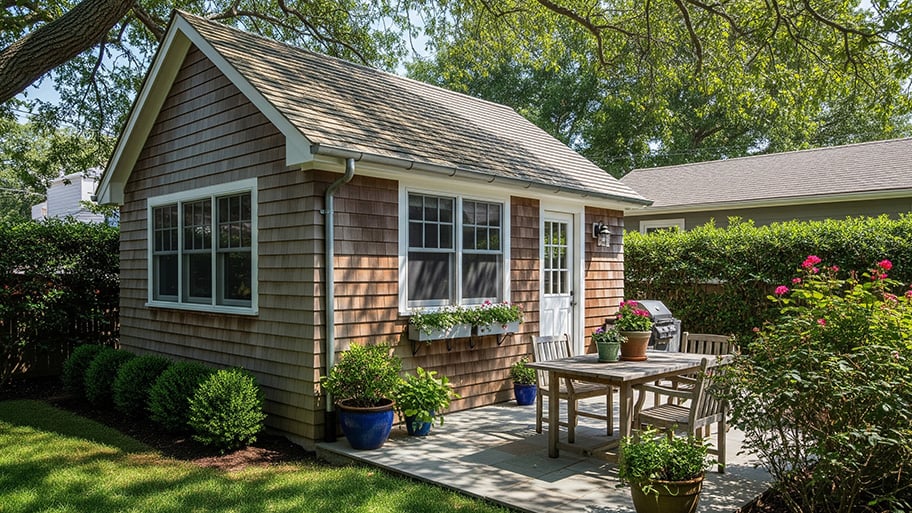
An accessory dwelling unit is a secondary living space on the same property as a primary home. It can be a finished basement apartment, a garage conversion, or a detached structure like a backyard cottage.
Interest in ADUs has grown because they offer flexibility. Instead of committing to a major move, homeowners can adapt their existing property to better meet changing needs.
As Meredith Fogle of The List Realty explains, “We’re seeing more homeowners think long term about how their property can serve multiple purposes. An ADU can create options, whether that’s for personal use now or for resale appeal later.”
Local regulations have evolved over the past few years, but the core framework remains focused on safety, zoning compliance, and neighborhood consistency.
Here are the key points to understand:
1. Zoning and Approval
Most residential zones in Montgomery County allow ADUs, but each project must meet specific requirements. You will need to go through a permitting process that reviews size, placement, and use.
2. One ADU Per Property
In most cases, a property is limited to one accessory dwelling unit.
3. Size Limits
ADUs are typically capped based on square footage. The exact limit depends on your lot and zoning category, but many fall within a defined range relative to the primary home.
4. Owner Occupancy Requirements
Montgomery County has historically required either the main home or the ADU to be owner-occupied. It is important to confirm the current rule at the time you apply, as policies can shift.
5. Parking Considerations
Some ADU projects may require additional off-street parking, depending on location and type of unit.
6. Rental Licensing
If you plan to rent the ADU, you will need to comply with local rental licensing and safety inspection requirements.
Because regulations can change and vary by property, it is always worth verifying details with the county before starting design or construction.
Costs vary widely depending on the type of unit, site conditions, and level of finish. Here is a general breakdown for 2026:
Basement Conversion
Often the most cost-effective option
Typical range: $80,000 to $150,000
Garage Conversion
Moderate structural work required
Typical range: $120,000 to $200,000
Detached ADU (New Construction)
Most flexible but highest cost
Typical range: $200,000 to $400,000+
Additional costs to plan for:
Architectural design and engineering
Permits and fees
Utility upgrades or separate connections
Site work such as grading or drainage
While the upfront investment can be significant, many homeowners view ADUs as a long-term value play rather than a short-term return.
ADUs are not one-size-fits-all. The value comes from how they fit into your specific situation.
1. Flexible Living Space
Some homeowners use ADUs as private guest accommodations or extended living space for household members.
2. Rental Income
A properly licensed ADU can generate consistent rental income, helping offset mortgage or ownership costs.
3. Work-From-Home or Creative Space
Detached units are increasingly used as offices, studios, or quiet workspaces separate from the main house.
4. Future Sale Positioning
Even if you do not need the space now, an ADU can make your property stand out when it’s time to sell.
Meredith Fogle notes, “Buyers today are looking for flexibility. When a home offers additional usable space with a clear purpose, it often attracts more attention and stronger offers.”
Not every ADU adds value in the same way. The impact depends on design, quality, and how well it integrates with the property.
Well-executed ADUs tend to:
Increase buyer interest
Expand the pool of potential buyers
Offer a clear functional benefit that buyers can immediately understand
However, poorly planned or non-compliant units can create complications during a sale. That’s why it is critical to follow local rules and maintain proper documentation.
This is one of the most common questions homeowners ask.
The answer depends on your timeline and goals.
An ADU may make sense if:
You plan to stay in the home for several years
You want to use the space personally or generate income
Your lot and layout support a well-designed addition
It may not make sense if:
You plan to sell in the near future
Construction costs would not be recovered in your price range
The project would delay your selling timeline
A quick property-specific analysis can help you decide. Looking at comparable sales with and without ADUs is often the most practical way to evaluate potential return.
Accessory dwelling units are becoming a meaningful part of the housing conversation in Montgomery County. They offer flexibility, potential income, and added appeal, but they also require careful planning, budgeting, and compliance.
If you’re considering building one, or wondering how an existing ADU affects your home’s value, it’s worth having a conversation before making any major decisions. The right strategy depends on your property, your timeline, and your long-term goals.
Stay up to date on the latest real estate trends.

By Meredith
By Meredith Fogle

By Meredith Fogle

By Meredith Fogle

By Meredith Fogle

By Meredith Fogle

By Meredith Fogle

By Meredith Fogle

By Meredith Fogle
You’ve got questions and we can’t wait to answer them.