Montgomery County vs. Nearby Counties: A 2026 Housing and Lifestyle Comparison
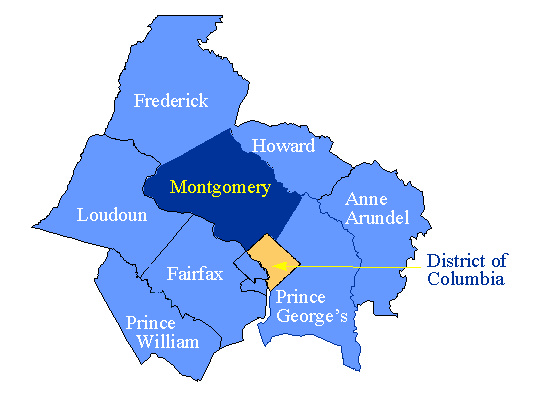
If you are planning a move in 2026, one of the biggest questions is not just what home to buy, but where to buy it. Many buyers exploring Montgomery County are also comparing nearby areas like Frederick County, Howard County, Prince George’s County, Fairfax County, and Loudoun County. Each offers a different mix of housing styles, commute options, taxes, amenities, and long-term costs.
Understanding those differences early can help buyers narrow their search and avoid wasting time touring homes in areas that may not match their priorities.
According to Meredith Fogle with The List Realty, many buyers start with one county in mind but expand their search once they better understand pricing, transportation patterns, and lifestyle tradeoffs.
“People often begin their search focused on a specific town or county, but once they compare taxes, commute times, home styles, and inventory levels side by side, their priorities sometimes shift,” says Meredith Fogle with The List Realty. “The best fit is not always the area they originally expected.”
The DMV housing market remains highly interconnected in 2026. Buyers who work in Montgomery County may still consider homes in Frederick, Howard, or Northern Virginia depending on budget and commuting flexibility. Others may prioritize newer construction, lower maintenance living, walkability, access to parks, or proximity to family.
Instead of focusing only on county names, many buyers compare areas based on:
Monthly housing costs
Property taxes
Home age and maintenance expectations
Commute flexibility
Public transportation access
Lot sizes
Availability of townhomes, condos, or single-family homes
Lifestyle conveniences like trails, shopping, dining, and recreation
Future resale flexibility
The right fit depends on how those factors align with a buyer’s daily routine and financial goals.
Montgomery County continues to attract buyers because of its variety. Housing inventory ranges from urban-style condos near Metro access to suburban townhomes and larger detached homes on quieter lots.
One advantage of Montgomery County is flexibility. Buyers can often choose between more walkable environments, transit-oriented communities, or lower-density residential areas without leaving the county entirely.
Common reasons buyers consider Montgomery County include:
Access to major commuter routes
Multiple transit options
Established neighborhoods with mature landscaping
A wide range of housing styles and price points
Extensive parks, trails, libraries, and recreation facilities
Proximity to Washington, D.C. and major employment centers
However, buyers should also evaluate:
Property tax obligations
HOA or condo fees
Traffic patterns
Older home maintenance needs
Competitive inventory in certain price ranges
For many households, Montgomery County offers convenience and flexibility, but it is important to compare total monthly ownership costs rather than focusing only on purchase price.
Frederick County remains popular with buyers looking for more square footage or newer construction opportunities at different price points than parts of Montgomery County.
Some buyers are drawn to:
Larger lots
Expanding new construction communities
More recently built homes
Access to outdoor recreation
Growing retail and dining infrastructure
At the same time, commute distance can become a major factor depending on work location and travel frequency. Buyers should test realistic drive times during their normal commuting hours rather than relying only on map estimates.
Lifestyle priorities also matter. Some buyers prefer a faster-paced, transit-connected environment, while others prioritize additional space and lower-density surroundings.
Howard County often appeals to buyers who want relatively central access between Baltimore and Washington employment hubs.
Buyers frequently compare Howard County and Montgomery County when looking for:
Planned communities
Commuter convenience
Recreation amenities
Townhome and single-family options
Access to shopping and dining corridors
Inventory levels and pricing can vary significantly by location and housing type, which is why many buyers benefit from comparing multiple areas side by side instead of limiting themselves too early.
Prince George’s County is frequently part of the conversation for buyers seeking access to major employment areas while exploring a broader range of housing costs.
Depending on location, buyers may find:
Different entry price points
Transit accessibility
Established residential communities
Redevelopment and infrastructure investment
Condo, townhome, and detached home options
As with any county comparison, buyers should evaluate monthly ownership expenses carefully, including taxes, insurance, commuting costs, HOA fees, and maintenance expectations.
Some buyers considering Montgomery County also explore Northern Virginia markets, particularly Fairfax and Loudoun Counties.
Fairfax County often appeals to buyers prioritizing:
Access to major employment corridors
Transit connectivity
Established suburban communities
Extensive shopping and business infrastructure
Loudoun County may attract buyers interested in:
Newer housing developments
Larger planned communities
Expanding commercial growth
Additional space in certain areas
Cross-state comparisons can become more complex because taxes, commuting logistics, registration costs, and transportation patterns differ between Maryland and Virginia. Buyers should compare total lifestyle costs rather than focusing solely on home prices.
Before narrowing a search area, buyers can benefit from asking practical questions like:
How often will I realistically commute?
What monthly payment range feels comfortable long term?
Do I prefer a newer home or an established community?
How important is transit access?
How much home maintenance am I comfortable handling?
Do I want walkability, larger lots, or lower-density surroundings?
How important is future resale flexibility?
What daily conveniences matter most to my routine?
These questions often help buyers identify which counties align best with their priorities.
Housing decisions are rarely just about square footage. Buyers also think about how an area fits into everyday life.
Some households prioritize:
Trail systems and parks
Shorter commutes
Entertainment and dining access
Community events
Access to major airports
Flexible transportation options
Lower-maintenance living
Space for hobbies or home offices
There is no universal “best” county. The right choice depends on how a buyer wants their day-to-day life to function.
Because county lines can dramatically affect taxes, inventory, transportation access, and long-term costs, buyers often benefit from comparing multiple areas with current market data instead of relying on assumptions or outdated online information.
“Buyers make stronger decisions when they compare counties using real numbers and realistic expectations about daily life,” says Meredith Fogle with The List Realty. “A side-by-side comparison can reveal options they may not have initially considered.”
In a competitive and fast-moving market, understanding those differences early can make the home search process more focused, efficient, and less stressful.
Stay up to date on the latest real estate trends.

By Meredith Fogle

By Meredith Fogle
By Meredith Fogle

By Meredith
By Meredith Fogle

By Meredith Fogle

By Meredith Fogle

By Meredith Fogle

By Meredith Fogle
You’ve got questions and we can’t wait to answer them.