She Moved to Florida Knowing No One and Became a Top Producer, Here's How
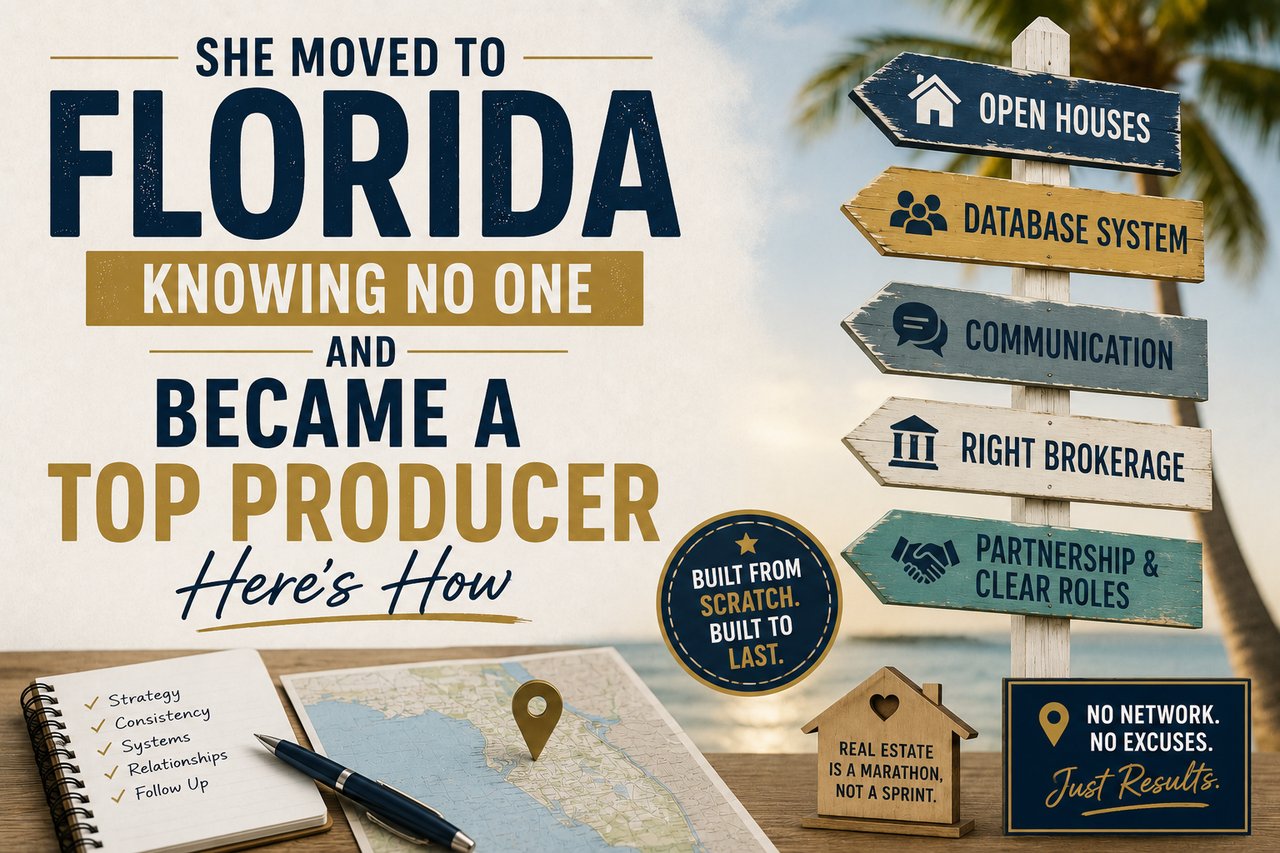
Kim Bronstein moved to Florida's Treasure Coast in 2016 knowing exactly one person: her husband. No local network, no established sphere of influence, no built-in referral base. She joined Meredith Fogle on "So You Want to Be a Real Estate Agent" to talk through how she built a business from that starting point.
Growing up in the business, then choosing a different path first
Kim is a second-generation agent. Her father ran an independent brokerage in New Jersey, and Kim spent much of her childhood in his office. Despite that early exposure, she spent 12 years originating mortgage loans before making the switch to real estate herself, largely because she didn't want to compete with the same agents who'd been referring mortgage business to her for over a decade. The move to Florida gave her a clean transition point: she could shift into real estate there while continuing to send referral business back to her contacts up north.
Two playbooks: what to do, and what not to do
Kim describes keeping two mental playbooks built from over a decade of watching agents work, one of best practices, one of mistakes to avoid. The throughline in both: communication. Nearly every transaction problem she's seen traces back to a communication breakdown rather than the underlying issue itself.
"In this business, I think nine times out of 10, that's where things get really yucky," she said. "It's not, I don't know, the oil tank was old and needed to be removed. It's because of the communication around it that didn't occur as it should have."
Finding the right brokerage by trusting a gut read
When Kim first arrived, she chose a large national brokerage that didn't feel like the right fit. She found her current firm almost by accident, stopping in to pick up a lockbox key and noticing small details in how she was treated while waiting. She came back a second time specifically to see if that same environment held up, and when it did, she asked to be considered for a position. What sealed it was the brokerage's philosophy that listings belonged to the firm as a whole, meaning any agent, including a brand new one, was encouraged to hold open houses on any listing in the office.
Open houses as a long-term strategy, not a weekend task
Kim leaned heavily into open houses from day one, often multiple times a week rather than only on weekends. She built a consistent sign-in and follow-up system from the start, treating every visitor as a potential future client rather than a one-time interaction.
That patience paid off in unexpected ways. Last year, she received a listing call from a couple she'd met at one of the very first open houses she ever hosted, eight years earlier. "It might feel like nothing is happening," she said. "Trust me, it's happening."
Why a database needs a system, not just contacts
Every person Kim meets, whether at an open house, a grocery store, or a community event, gets logged into her database with context about where they met. But the real distinction is her "Ninja Flow" tagging system: contacts she identifies as real opportunities get tagged for ongoing monthly touches through email and phone calls, while others simply stay in the database without active follow-up.
The distinction matters because a database without a consistent outreach system behind it doesn't generate business on its own. It's the deliberate tagging and follow-through that turns a contact list into a pipeline.
Building a business with a spouse
Kim and her husband Aaron built their real estate partnership together, and she's candid that it wasn't smooth from the start. Without an early conversation about roles and structure, the partnership initially created friction. Her advice for anyone considering working with a spouse, sibling, or other family member: have the difficult conversation about who's actually leading the business before conflict forces the issue.
"Have you ever seen a successful business run successfully with two CEOs?" she said. "It doesn't work." Kim and Aaron now operate with a clearly defined structure, one that's supported real, measurable growth in their production.
If you're building a real estate career and want a structured, mentorship-driven path like this one, reach out to The List Realty to learn more about growing your business here.
Watch the original episode
Watch: From New Market to Top Producer — Kim Bronstein's Playbook
Stay up to date on the latest real estate trends.

By Meredith
By Meredith Fogle
By Meredith Fogle
By Meredith Fogle
By Meredith Fogle
By Meredith Fogle
By Meredith Fogle
By Meredith Fogle
By Meredith Fogle
You’ve got questions and we can’t wait to answer them.