Is Geographic Farming Still Worth It - and Does The List's Local Focus Fit How You Want to Work?
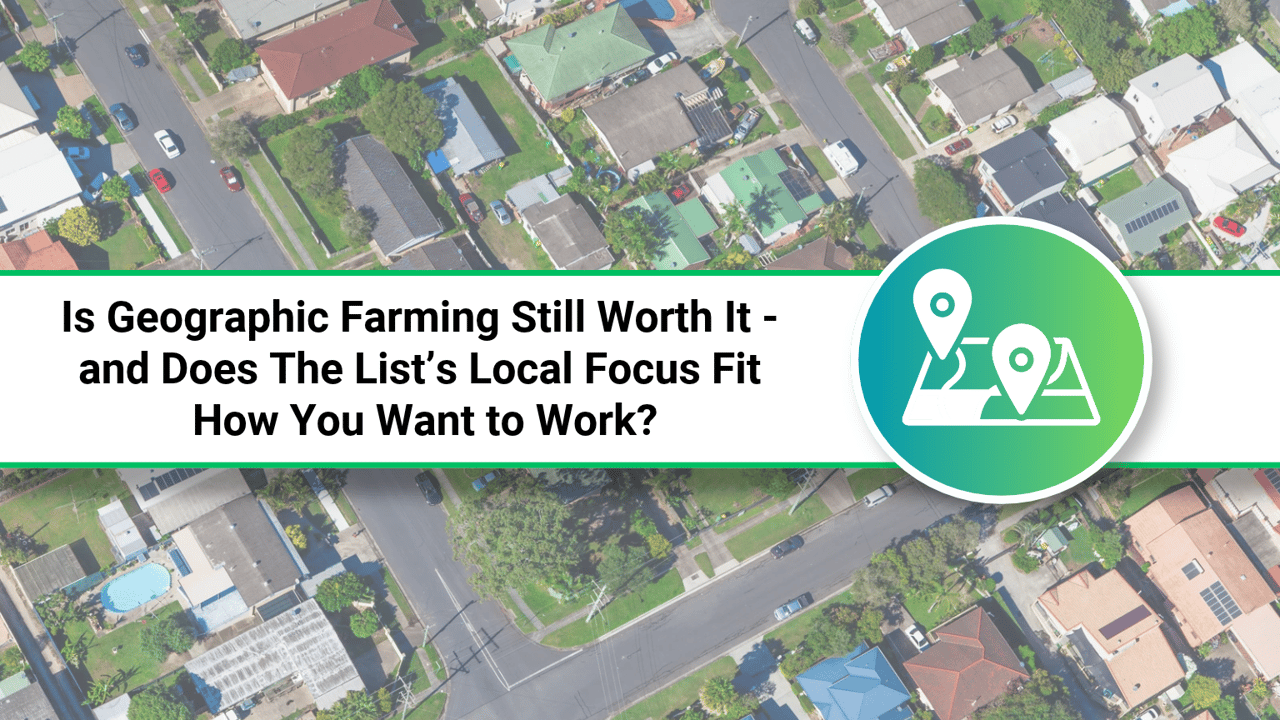
If you are a real estate agent in or around Montgomery County, you have probably felt the tug-of-war between two growth stories. One says chase every zip code, every lead source, every possible deal. The other says pick a patch of ground and become unmistakably useful there.
Done well, it is a business design choice: fewer places, deeper fluency, repeated presence, and a reputation that compounds. Done poorly, it is a flyer route with no relationship engine behind it.
This article is for agents who want a clear framework for whether hyperlocal focus makes sense - and whether the "craft" of farming matches how you actually want to work. No hype. No "everyone must farm." Just fit.
"Farming is not a mailer. It is becoming the person neighbors trust when the conversation turns serious." - Meredith Fogle, The List Realty
Here is what geographic farming really requires in 2026. Farming is not only branding a neighborhood on your Instagram bio. It usually means:
- Consistent presence where owners already live and talk
- Real market fluency (what sold, what stalled, what pricing mistakes repeat)
- Content and conversations that answer local process questions, not generic slogans
- Systems for follow-up so an open-house chat does not evaporate
- Patience through months where the scoreboard is quiet while trust is still building
It also means saying no to some opportunities that do not serve the business you are building. That tradeoff is the point - and the hard part.
Farming often tends to be worth it when you:
- Learn faster by repetition in one micro-market than by constant context-switching
- Enjoy becoming a local resource (HOA rhythms, listing prep patterns, seasonal move timing) without turning community knowledge into stereotypes
- Want referrals that come from being seen as competent nearby, not only from paid lead portals
- Are willing to measure leading indicators (conversations, appointments, sphere touches) while transactions catch up
- Prefer a craft identity - "I know how this pocket works" - over a volume identity that depends on wherever the phone rings
Farming is often a weaker fit when you:
- Need immediate, high-volume lead flow and cannot resource a longer trust cycle
- Dislike repetition and get bored serving similar property types
- Want total geographic freedom every week with no through-line to your brand
- Treat "local" as a logo exercise while your calendar still chases everything everywhere
Neither preference is immoral. Misalignment is what burns people out.
Before you marry a farm, pressure-test it. Use these as working questions, not a score that proves you must join anyone.
1. Can you name the farm in one breath? If your "farm" is half the county, it is usually a wish, not a focus.
2. Where will your first 50 meaningful touches come from? Open houses, sphere, community presence, listing content, partner intros - pick engines you will actually run.
3. What local problems can you teach in public without inventing drama? Pricing discipline, prep sequencing, offer structure, seasonal showing plans - useful beats hype.
4. What will your public teaching sound like for this farm - process and prep help, not hype or overclaims?
5. What does success look like in 90 days besides closed units? Appointments, listing conversations, repeat touches, and proof you are becoming findable locally.
Farming is often a stronger fit when you:
- Want to deepen geographic skill rather than collect random zip codes
- Care about listing quality and client experience as much as lead volume
- Are coachable on systems while still owning your relationships
- Prefer warm expertise over urgency gimmicks
- Care about respectful, professional client language in every conversation
Often a weaker fit when you:
- Want a place to park a license with no local participation
- Need a model built only around one paid lead type that is not how we work
- Resist shared standards around process and follow-through
- Treat farming as spam-with-a-logo instead of service-with-a-reputation
Fit is mutual - and if you want to explore working with a team that supports the way you want to build your business, take these steps:
- Interview a team the way you would interview a major listing client.
- Ask how local expertise is actually supported - marketing, mentorship, coverage, listing prep - versus aspirational language.
- Ask what a normal week looks like for someone at your experience level.
- Ask how opportunities are handled and leads are distributed.
Visit the environment if you can. Notice whether people talk about clients with respect. Notice whether local knowledge shows up as teaching and preparation - or as shortcuts.
Agents who are curious about The List Realty can reach out for a fit conversation grounded in how you want your weeks to feel. Come with the farm you think you want, the engines you will actually run, and the boundaries you need to stay sane. If we are aligned, you will feel it in the work. If we are not, you should still leave with a sharper farming-versus-everywhere decision framework you can use anywhere.
For more from The List on local Montgomery County practice and agent growth, visit our website, and watch companion videos when they are available. If you want to talk fit - not get a pitch marathon - contact The List Realty and tell us how you want to work.
Stay up to date on the latest real estate trends.
By Meredith
By Meredith Fogle
By Meredith Fogle

By Meredith Fogle
By Meredith Fogle
By Meredith Fogle
By Meredith Fogle

By Meredith Fogle
By Meredith Fogle
You’ve got questions and we can’t wait to answer them.