What Home Staging Really Does for Your Sale: Lessons From a Professional Stager
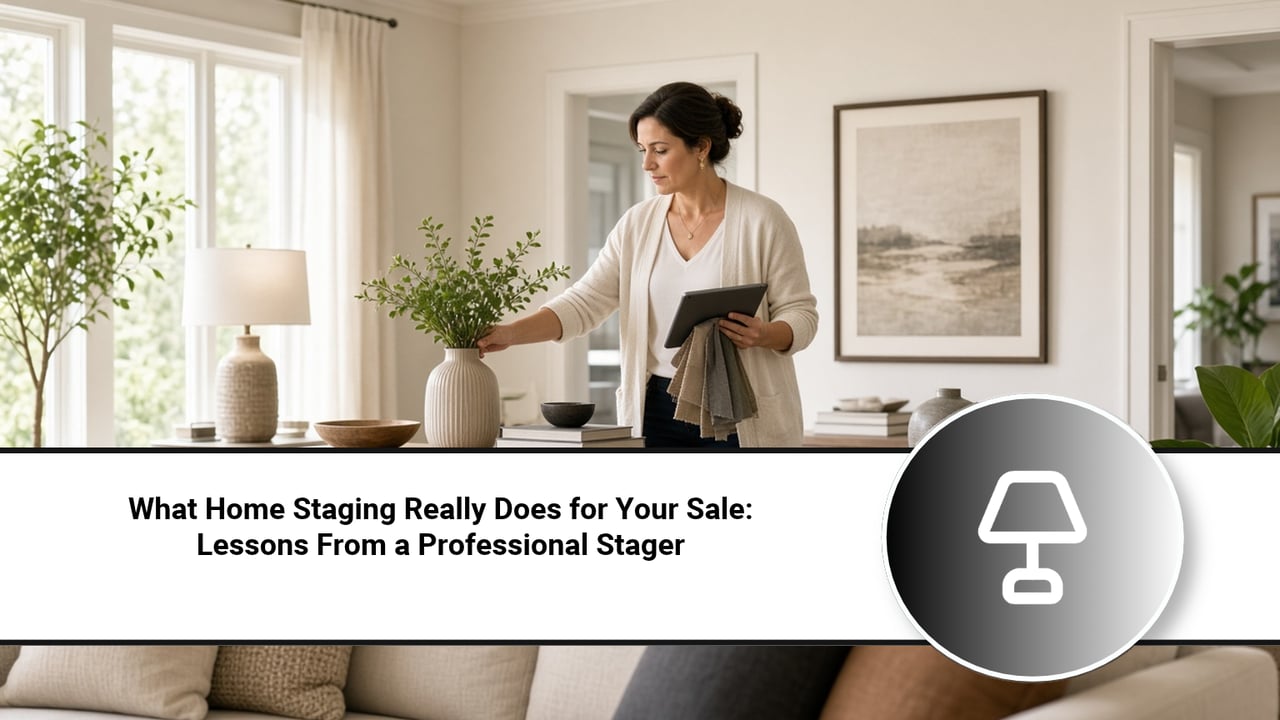
If you are getting ready to sell, staging can sound like a nice extra, something to consider once the repairs and the paperwork are done. Professionals see it very differently. In a recent episode of our podcast, “So You Want to Be a Real Estate Agent,” Meredith Fogle sat down with Carrie Halterman, the professional stager who works in-house with The List Realty team, to talk about what staging actually does for a sale, the different ways it can be done, and the mistakes that quietly cost sellers time and money. Here are the biggest takeaways for anyone preparing a home for the market.
The first point Carrie made is that staging is not interior design. Interior design is created for the people who will live in a home, so it reflects their routines and their personal taste. Staging is meant to appeal to as many buyers as possible. "Interior design is intended for the person who's going to be living in the home," Carrie explained, while staging "is going to be more broad. You want it to be open to everyone." That usually means neutral, polished, and a little elevated, so that a buyer walks in and thinks all they need to do is hang their own pictures. Carrie described the goal for bedrooms as feeling like a luxurious hotel room, whatever the price point.
The reason this matters is that buyers make decisions emotionally and spatially at the same time. In an empty room, most people struggle to judge whether a sofa or a king bed will fit, so the space tends to feel smaller than it really is, and a room without a clear purpose can leave buyers confused about how they would use it. Staging answers those questions before buyers have to ask them. National research backs this up. In the National Association of Realtors 2025 Profile of Home Staging, 83% of buyers' agents said staging makes it easier for buyers to visualize a property as their future home, and buyers' agents ranked the living room, the primary bedroom, and the kitchen as the most important rooms to stage (NAR 2025 Profile of Home Staging). NAR also reports that more than a quarter of agents saw staged homes receive 1% to 10% more in the dollar value offered, and about half of sellers' agents saw staged homes sell faster (NAR Consumer Guide to Staging Your House for a Sale).
Staging also looks different depending on whether you are still living in the home. Vacant staging happens after you have moved out, and at a minimum it covers the rooms buyers care about most, like the living and dining areas, the kitchen, and the primary bedroom. Occupied staging works with what you already own. The stager curates your furniture, decides what should go to storage or donation, and helps you declutter and depersonalize, which means personal photos and anything with your name on it get packed away. Many homes fall somewhere in between. A seller may have kept only the large furniture, leaving rooms that feel bare, or may still be living in the house with an empty dining room. In those cases a stager supplements, adding lamps, art, and accessories, replacing a worn sofa, or furnishing a room so buyers immediately understand what it is for. Meredith noted a benefit sellers rarely expect: the process helps you begin letting go of the house before the move, which makes everything that follows feel easier.
Virtual staging has improved, but Carrie still sees a real gap and feels that virtual staging is not a good solution. Buyers fall for a furnished room online, then walk into an empty one weeks later and struggle to connect the two. Digital furniture is not always true to scale, and nothing on a screen recreates the emotional connection of walking through a finished space. Order and budget matter, too. Staging cannot hide work the house actually needs, so repairs and paint come first, then a thorough cleaning, then staging, then photography, and only then the launch. If your budget is limited, put it toward making the house itself look its best, because as Carrie put it, you are not selling the furniture, you are selling your house. And outdoor staging only makes sense for a truly generous patio or deck, since outdoor pieces are costly and rarely reusable.
Carrie and Meredith also shared the mistakes they see most often. A lone chair and plant tucked into the corner of an empty room raise more questions than they answer. Furniture that is out of scale, like a king bed crowded into a room built for a queen or an oversized sectional that swallows a living room, makes spaces look smaller. Bold accent colors, especially red, pull the eye away from the home's best features. Improvised furniture, such as boxes covered with bedding or an air mattress that deflates the night before a showing, can backfire in front of buyers. And too many accessories, like a trinket every few inches along a countertop, make a home feel cluttered instead of curated. The goal is for a buyer's eye to move easily through each room and land on the features that make the home special.
"We stage every home we list, regardless of price point, because staging affects how buyers feel the moment they walk in and how long a home sits on the market, and both of those show up in our sellers' bottom line," says Meredith Fogle, owner of The List Realty.
If you are planning to sell in Montgomery County, Gaithersburg, or Kentlands and Lakelands and want to know how staging could work for your home and your timeline, reach out to The List Realty for a no-pressure consultation. You can hear the full conversation with Carrie Halterman in our podcast episode Home Staging Secrets Every Listing Agent Needs to Know.
Stay up to date on the latest real estate trends.
By Meredith Fogle

By Meredith Fogle
By Meredith Fogle

By Meredith Fogle
By Meredith Fogle

By Meredith Fogle
By Meredith Fogle
By Meredith Fogle
By Meredith Fogle
You’ve got questions and we can’t wait to answer them.