How to Choose a Property Manager in Montgomery County: 10 Things to Look For
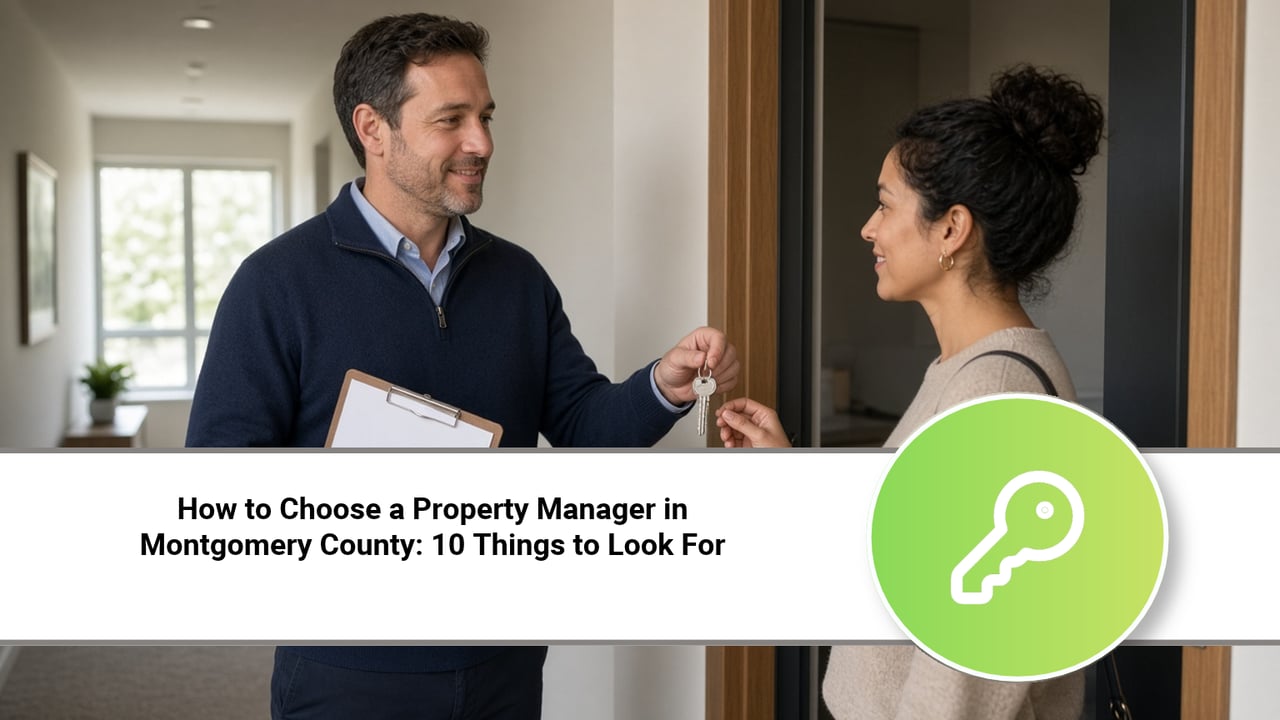
If you own a rental home, townhouse, or condo in Montgomery County, the company you hire to manage it can be the difference between steady, low-stress income and a string of expensive surprises. Many owners assume a property manager's main job is collecting rent and calling a plumber when something breaks. Felicia Kaminker, co-founder of LST Property Management, hears a version of the same story almost every week: an owner says they thought their property was being managed, and then a closer look turns up a year of deferred maintenance, missed inspections, and tenants who have not heard from anyone in months. Whether you are self-managing and thinking about handing it off, unhappy with your current company, or planning a future purchase, these are the ten things to look for.
The first is a manager who understands that rent collection is not management. Collecting rent is accounting. Real management protects the physical condition of your property and its long-term value, and that means working proactively instead of reacting after something fails. Think about how you treat the home you live in. You would not ignore a dripping faucet for six months or skip HVAC service until the system quits in July, because a $5 washer today prevents a much bigger plumbing bill later. A rental deserves the same attention. Felicia has walked into properties where a slow, unreported roof leak turned into rotted decking, mold remediation, and a five-figure repair, all because nobody was watching.
The second and third are communication and regular inspections. A good manager tells you what is happening before you have to ask, with updates that are clear and timely. Inspections matter because tenants do not report everything. Some never notice a slow leak hidden under the sink, some assume a stain or a squeak is normal in an older home, and some worry they will be blamed. Scheduled walk-throughs by a trained eye catch hairline cracks, musty smells, and soft spots in the floor while they are still small. As Felicia tells owners, you cannot protect what you have not seen.
The fourth is current, local knowledge. Rental rules here come in layers, and they carry real financial and legal consequences. Montgomery County requires owners to obtain a rental housing license before a property can be rented or even advertised for rent (Montgomery County DHCA, Rental License Information). Inside the City of Gaithersburg, rentals are licensed by the city every two years, with a full interior and exterior inspection before the final license is issued (City of Gaithersburg, Rental Housing). State requirements, such as lead paint rules for homes built before 1978, sit on top of both. Owners get fined for licenses that were never renewed and fail inspections over details like smoke detector placement that a local expert would catch in minutes.
The fifth and sixth are a trusted vendor bench and an owner's mindset. The cheapest contractor is rarely the least expensive choice over time. Established vendors show up when they say they will, explain what they found, and do work that lasts, and because they have been in your property before, they already know its water heater, its crawl space, and the age of its HVAC system. Your manager should have those relationships in place rather than searching online every time something breaks. Just as important, your manager should protect your money, not just spend it. Every repair decision should weigh health and code concerns, long-term value, how long the fix will last, and your budget. A manager who thinks like an owner asks questions, pushes back on inflated estimates, considers whether a repair can reasonably wait, and gives you options instead of rubber-stamping invoices.
The seventh and eighth are strong tenant relationships and financial transparency. Respectful, responsive service keeps good tenants longer, and longer stays mean fewer vacancies, fewer rounds of repainting and recarpeting, and less rent lost between leases. On the financial side, every dollar connected to your property should be easy to follow, with clear, itemized owner statements, invoices you can actually understand, a record of rent received and disbursed, and visibility into any reserve held for upcoming repairs. You should never have to chase someone to explain a line item.
The ninth is a real preventive maintenance plan. That includes changing HVAC filters on a schedule, resealing caulk before water gets in, watching the grading so water drains away from the foundation, inspecting the roof regularly, and cleaning dryer vents. None of this is wasted spending. A $20 filter costs far less than a replacement compressor, and a caulking touch-up costs far less than a rotted subfloor. The tenth is accessibility and accountability. With a boutique firm, you are not calling a national service center and reaching whoever picks up that day. You are working with people who know your property, your market, the vendors they have sent to your home, and you. When you interview companies, ask how often they inspect and what you receive afterward, how quickly they respond, who their vendors are and how repairs get approved, how they handle licensing and inspections where your property is located, and what their owner statements look like.
"Property management isn't about collecting rent. It's about protecting one of the largest financial assets most people will ever own," says Felicia Kaminker, co-founder of LST Property Management.
If you own a rental in Montgomery County, Gaithersburg, or the surrounding area and want an honest look at whether your property is getting the care it needs, reach out to LST Property Management for a complimentary rental analysis or a no-pressure consultation. You can also request the free Property Manager Interview Guide at LSTPropertyManagement.com and watch Felicia Kaminker walk through all ten points in our LST Property Management video How to Choose a Property Manager: 10 Things to Look For.
Stay up to date on the latest real estate trends.
By Meredith Fogle

By Meredith Fogle

By Meredith Fogle
By Meredith Fogle

By Meredith Fogle
By Meredith Fogle

By Meredith Fogle
By Meredith Fogle
By Meredith Fogle
You’ve got questions and we can’t wait to answer them.