Sell the Rental or Keep the Lease? How Montgomery County, MD Investors Are Deciding in 2026
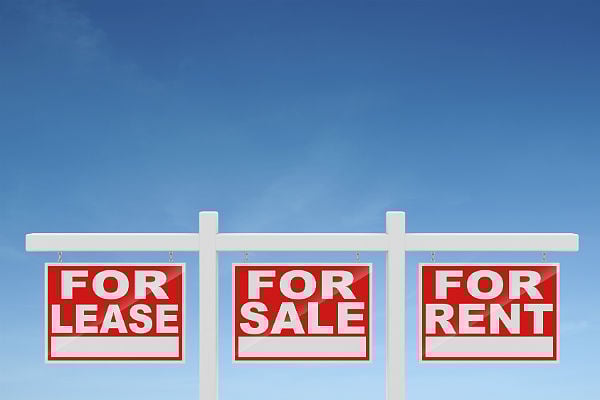
Owning a rental property in Montgomery County, MD has long been considered a steady, long-term wealth strategy. But in 2026, many local investors are pausing to ask a sharper question:
Does it still make sense to hold or is this the moment to sell?
Between stabilizing interest rates, evolving tax considerations, and shifting investor goals, the answer is no longer automatic. What we’re seeing instead is a more strategic, numbers-driven decision - one that depends on performance, opportunity cost, and long-term plans.
Here’s how Montgomery County, MD investors are thinking it through.
For many rental owners, the past few years were about riding out uncertainty. In 2026, the conversation has shifted toward optimization.
Investors are weighing:
How today’s market value compares to their original basis
Whether rental income is still outperforming alternative uses of capital
How much effort and risk they want to manage going forward
As Meredith Fogle, founder of The List Realty, advisest:
“The decision to sell or hold a rental in 2026 isn’t emotional - it’s mathematical. Investors are asking whether their equity is still working as hard as it could be.”
Holding the property can be a strong move when the fundamentals are solid.
Investors are often choosing to keep the lease in place when:
The property produces consistent, positive cash flow
Fixed financing keeps monthly costs predictable
The rental requires minimal ongoing capital investment
Long-term appreciation remains part of their broader plan
For owners who value steady income and portfolio stability, holding can continue to serve as a reliable anchor, especially when the property is already optimized.
On the other side, many Montgomery County, MD investors are deciding that selling now creates flexibility they didn’t have before.
Common reasons include:
Significant equity that could be redeployed elsewhere
Rising maintenance or management fatigue
A desire to simplify holdings or reduce exposure
Shifting personal or financial priorities
In some cases, the return on equity (not just total value) is the deciding factor. If a property’s income hasn’t scaled alongside its market value, selling can unlock capital that performs more efficiently in a different strategy.
An active lease doesn’t automatically block a sale, but it does shape strategy.
Investors are weighing:
Whether to sell with the lease in place to attract other investors
Whether timing the sale near lease expiration expands buyer options
How lease terms affect pricing and negotiation leverage
New rules requiring landlords to provide tenants with a right of first refusal to purchase the property
The key is aligning timing with the intended buyer audience and the owner’s financial goals.
Rather than asking “Is it a good time to sell?”, today’s investors are asking:
“What does this property do for me next?”
That means looking at:
Net income vs. equity tied up
Tax implications and timing considerations
Alternative investment or personal uses for the capital
Risk tolerance and management appetite
As Meredith Fogle explains:
“There’s no universal right answer, but there is a right answer for each investor. The clarity comes from reviewing the property as an asset, not just a home you happen to rent.”
In 2026, Montgomery County, MD investors aren’t reacting; they’re recalibrating.
For some, that means holding a well-performing rental with confidence. For others, it means selling strategically and putting equity to work in a new way. The common thread is intentional decision-making grounded in data, not guesswork.
If you’re weighing whether to sell the rental or keep the lease, a clear-eyed review of your numbers - and your goals - is the best place to start.
Stay up to date on the latest real estate trends.
By Meredith

By Meredith Fogle

By Meredith Fogle

By Meredith Fogle

By Meredith Fogle

By Meredith Fogle

By Meredith Fogle

By Meredith Fogle

By Meredith Fogle
You’ve got questions and we can’t wait to answer them.