Stop Selling Buyer Agency Agreements: How Top Agents Earn the Signature Instead
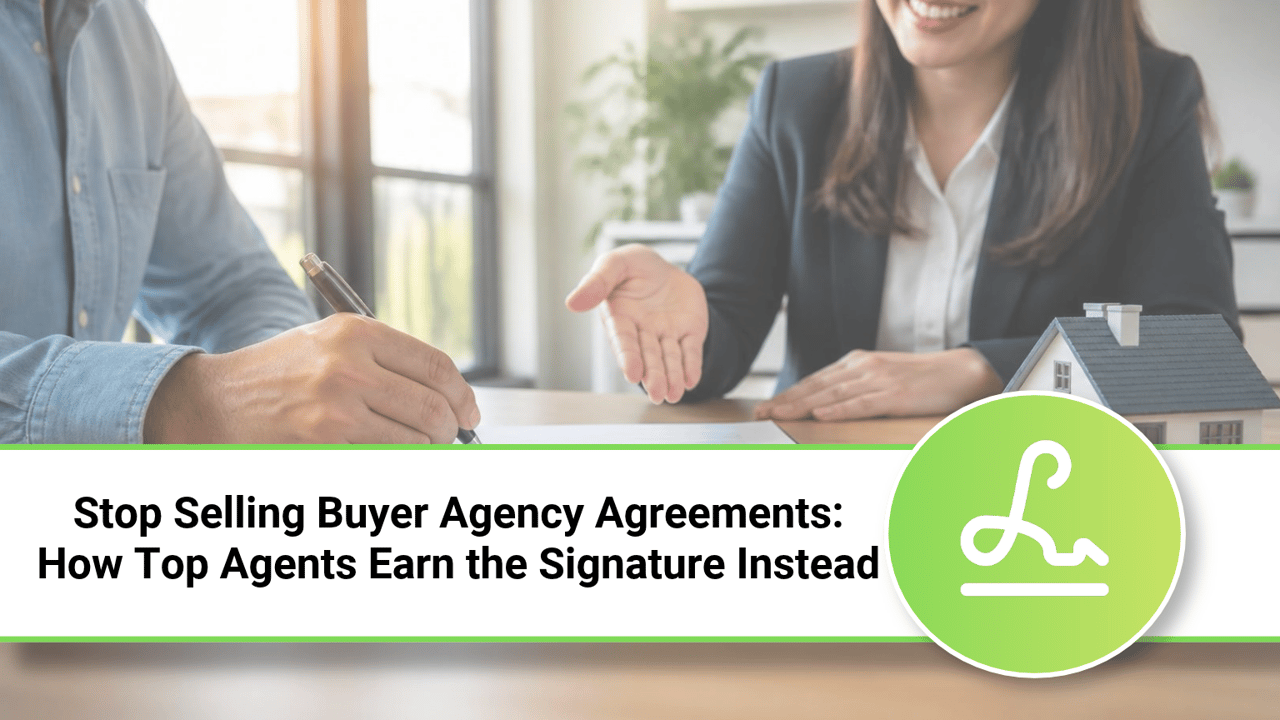
If you are a buyer's agent who feels like the hardest part of the job is getting buyers to sign a Buyer Representation Agreement, you may be solving the wrong problem. Top agents do not talk buyers into signing. They create so much value in the first conversation that signing becomes the natural next step.
Picture two versions of the same first call. In the first, a buyer says they found a house online and asks to meet at five. The agent says sure, rushes over, unlocks the door, and points out the kitchen and the basement. Forty-five minutes later the buyer says thanks, leaves, and is never heard from again. In the second, the agent says, "I would love to help. Before we start touring, let's spend twenty or thirty minutes talking about what you are trying to accomplish." Now the agent is listening, educating, and planning instead of opening doors. By the first showing, the buyer is already thinking, I trust this person. The difference was not the paperwork. It was perceived value.
Most agents believe they have a paperwork problem. More often they have a value problem, because paperwork does not create trust. Nobody chooses a financial advisor because the engagement letter looks nice. The decision happens long before the forms, and real estate works the same way. When buyers hesitate, it is rarely about the contract itself. They are quietly asking whether they picked the right person, whether that person knows what they are doing, and whether they will be protected from an expensive mistake. Those are questions about confidence, not signatures.
Meredith Fogle, who just celebrated 30 years in real estate and coaches agents across North America, describes trust as resting on four things: competence that buyers see demonstrated rather than claimed, care that makes them feel understood rather than processed, consistency in a process where every step has a purpose, and clarity that answers what happens next before they think to ask. When those four are present, commitment feels natural.
From there, a strong buyer consultation walks through four decisions in order. The first is why move. People do not buy houses, they buy solutions to problems, and "we need another bedroom" is a symptom, not a motivation. A new baby, a parent moving in, or a home office each changes the advice. The second is where to buy. The neighborhood a buyer names first is where they think they want to be, and the agent's job is to become an expert on their options, not just one community. A simple question like "Where do you live now?" can reveal that the buyer needs to sell first, which means the consultation just uncovered a listing opportunity. The third is what to buy, where the most useful follow-up is "Why is that important?" A finished basement might mean a playroom, a guest suite, or an office, and sorting the list into needs, strong wants, and nice-to-haves turns a hunt for perfection into thoughtful trade-offs. Buyers who change their minds every weekend are rarely difficult. Most are under-questioned.
The fourth decision is who should guide them, and this is where many agents start when it should be where they finish. Once a buyer feels heard, credentials finally matter, especially when they are tied to something the buyer said. Instead of "I am a great negotiator," try "Because you told me getting the best value matters most, let me show you how I help buyers negotiate with confidence in this market." Then walk them through exactly what working together looks like: how you will communicate, search, schedule showings, evaluate value, write and negotiate offers, and what happens after contract and after closing. Uncertainty creates anxiety. Clarity creates confidence.
"The Buyer Representation Agreement does not create trust. It documents trust you have already earned," says Meredith Fogle, owner of The List Realty.
It helps to picture the whole thing as a pyramid. The signature sits at the top, and it is what so many agents chase. Underneath it is commitment, under that confidence, under that understanding, and at the foundation, trust. You cannot build the top first. That also reframes objections. "I would like to think about it" usually means "I am still uncertain." "Can't we just meet at the house?" usually means "I do not yet see why your process matters." Objections are often requests for more certainty, and when you hear them that way you stop getting defensive and start being helpful. The most common consultation mistakes follow the same pattern: asking for commitment before earning trust, talking far more than listening, confusing information with value, competing on access to listings that buyers can already find on their own, and making the meeting about the agent instead of the buyer.
Before your next buyer consultation, skip the script rehearsal and ask yourself four questions. How will I build trust? How will I create understanding? How will I build confidence? And how will I make commitment feel like the obvious next step? Meredith's free Buyer Consultation Blueprint puts the framework on paper, with her consultation agenda, discovery questions, needs and wants worksheet, buyer roadmap, checklist, and the Buyer Confidence Pyramid.
If you are an agent who wants to build a business on expertise instead of pressure, reach out to The List Realty to start a conversation about how we coach and support agents.
Stay up to date on the latest real estate trends.
By Meredith
By Meredith Fogle
By Meredith Fogle

By Meredith Fogle
By Meredith Fogle

By Meredith Fogle

By Meredith Fogle
By Meredith Fogle

By Meredith Fogle
You’ve got questions and we can’t wait to answer them.